Multi split air conditioning lets you heat and cool several rooms from one outdoor unit. Each room has its own indoor unit and its own temperature setting, so a home or small office can be kept comfortable without a separate system for every space.
This guide explains how a multi split system works, the parts involved and the indoor unit styles you can choose from. It also compares multi split with single split and VRF systems, and covers what to think about before you buy.
What is multi split air conditioning?
A multi split air conditioning system connects two or more indoor units to a single outdoor unit. Most systems take up to around five indoor units, depending on the model and the size of the outdoor unit.
It sits between a single split, which serves one room, and a VRF or VRV system, which is built for larger commercial buildings with many zones. For homes, small offices, shops and surgeries, a multi split is often the right size of solution.
How a multi split system works
The outdoor unit contains a compressor that pressurises refrigerant and pumps it through copper pipework to each indoor unit. Inside, the refrigerant passes through a coil and absorbs heat from the room air, which a fan blows back out as cool air. The refrigerant then returns outside, where the heat is released, and the cycle starts again.
In heating mode the process runs in reverse. The system draws heat from the outside air and releases it indoors, which is why multi split units work as air to air heat pumps as well as air conditioners. Most modern systems use inverter compressors that speed up or slow down to match demand rather than switching fully on and off.
The main parts of a multi split system
There are three main parts, and each must be sized and installed correctly.
- The outdoor unit houses the compressor and heat exchanger. It is usually fixed to an outside wall, on the ground or on a flat roof, and its capacity limits how many indoor units the system can support.
- There is one indoor unit per room or zone, each with its own fan, coil and controller.
- Insulated copper refrigerant pipes, a condensate drain and a power cable run from the outdoor unit to each indoor unit. Good insulation and leak-free joints keep the system efficient.
Which indoor units can you use with a multi split?
One of the big advantages of multi split is that you can mix indoor unit styles on the same outdoor unit, choosing the best fit for each room.
Wall mounted
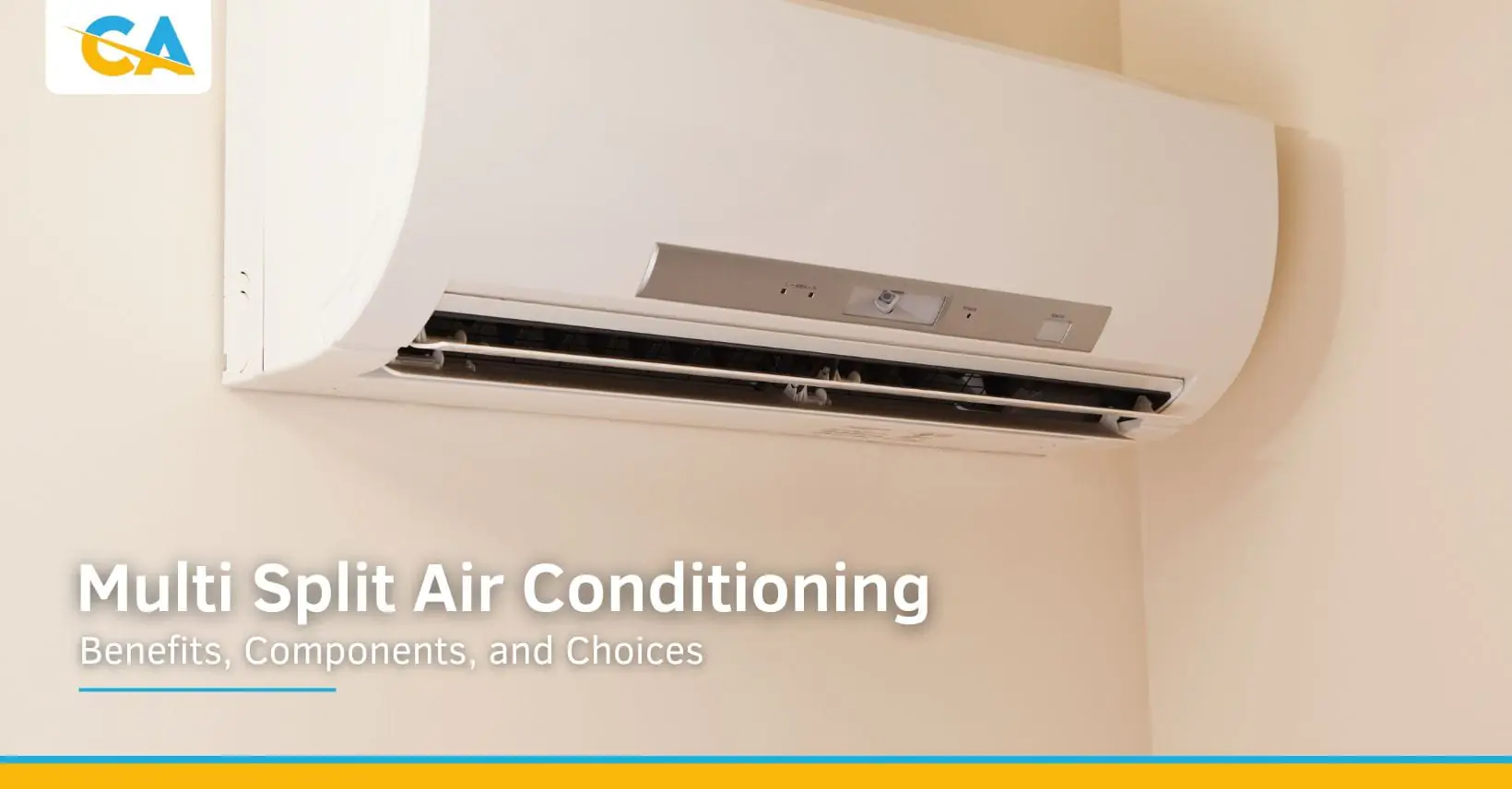
Wall mounted units are the most common choice for bedrooms, living rooms and small offices. They sit high on the wall, are quick to install and are usually the most affordable option. See our guide to wall mounted air conditioning units for more detail.
Ceiling cassette
Cassettes fit into a suspended ceiling, with only a flat grille on show. They spread air in several directions, which suits open plan offices, shops and larger rooms. Find out more about ceiling air conditioning units.
Floor or ceiling mounted
These units can sit low on a wall like a radiator or be fixed under a ceiling. They are useful in conservatories, loft rooms and spaces with sloping ceilings or little free wall space.
Ducted
Ducted units are hidden in a ceiling void, with air delivered through small grilles. Nothing is visible apart from the grilles, making them a good choice where appearance matters most.
Benefits of multi split air conditioning
- Separate room control: each person or team can set their own temperature, and empty rooms can be switched off.
- Lower running costs: inverter technology and zoning mean you only heat or cool the spaces in use.
- Less clutter outside: one outdoor unit instead of several keeps the outside of the building tidier.
- Heating and cooling in one: the same system keeps rooms cool in summer and warm in spring and autumn.
- Flexible design: different indoor unit styles can be used in different rooms on one system.
Multi split vs single split vs VRF
The right system depends mainly on how many rooms you need to serve and how large the building is.
| System | Rooms served | Best suited to | Main trade-off |
|---|---|---|---|
| Single split | One indoor unit per outdoor unit | A single room or office | Several rooms need several outdoor units |
| Multi split | Typically two to five indoor units | Homes, small offices, shops, surgeries | If the outdoor unit fails, all connected rooms are affected |
| VRF / VRV | Many indoor units across large zones | Larger commercial buildings, hotels, multi-floor offices | Higher cost and more complex design |
What to consider before choosing a multi split system
Room sizes and layout
Each indoor unit must be sized to its room, taking into account floor area, ceiling height, insulation, windows and heat from people or equipment. The total load then decides the size of the outdoor unit. A site survey from our Manchester air conditioning engineers is the only reliable way to get this right.
Energy efficiency
Check the SEER (cooling) and SCOP (heating) figures on the product label. Higher numbers mean the system uses less electricity for the same output.
Noise levels
Compare the decibel ratings of both indoor and outdoor units, particularly for bedrooms and quiet offices. Neighbours may hear the outdoor unit too, so position matters.
Brand, warranty and installer
Choose a well-known manufacturer with a good warranty, and make sure the installer is F-Gas certified, as the law requires for anyone handling refrigerant. Some warranties also depend on the system being serviced regularly.
Commercial Air Conditioning has over 20 years' experience installing multi split systems for homes and businesses. We are REFCOM registered, our engineers are F-Gas certified, and our teams work across the UK from our base in Westhoughton, Bolton. To find out which setup suits your building, get in touch for a free survey and quote.
Frequently asked questions
Can each indoor unit heat and cool at the same time?
Not on a standard multi split. All indoor units connected to one outdoor unit usually need to run in the same mode, either heating or cooling. If you need some rooms heating while others cool, a heat recovery VRF system is the usual answer.
Can I add more indoor units later?
Only if the outdoor unit has spare connections and capacity. If you think you may extend the system, tell your installer at the survey stage so they can size the outdoor unit with this in mind.
How often does a multi split system need servicing?
We recommend a service once a year to clean filters and coils, check refrigerant and controls, and keep any warranty valid. Our air conditioning servicing costs £85 plus VAT.
Do I need planning permission for the outdoor unit?
It depends on your property and where the outdoor unit will go. Rules vary between councils, and listed buildings, conservation areas, flats and leasehold properties often have extra restrictions. Check with your local council, and your landlord or freeholder if you have one, before work starts.
Categories: Air Conditioning Guide