
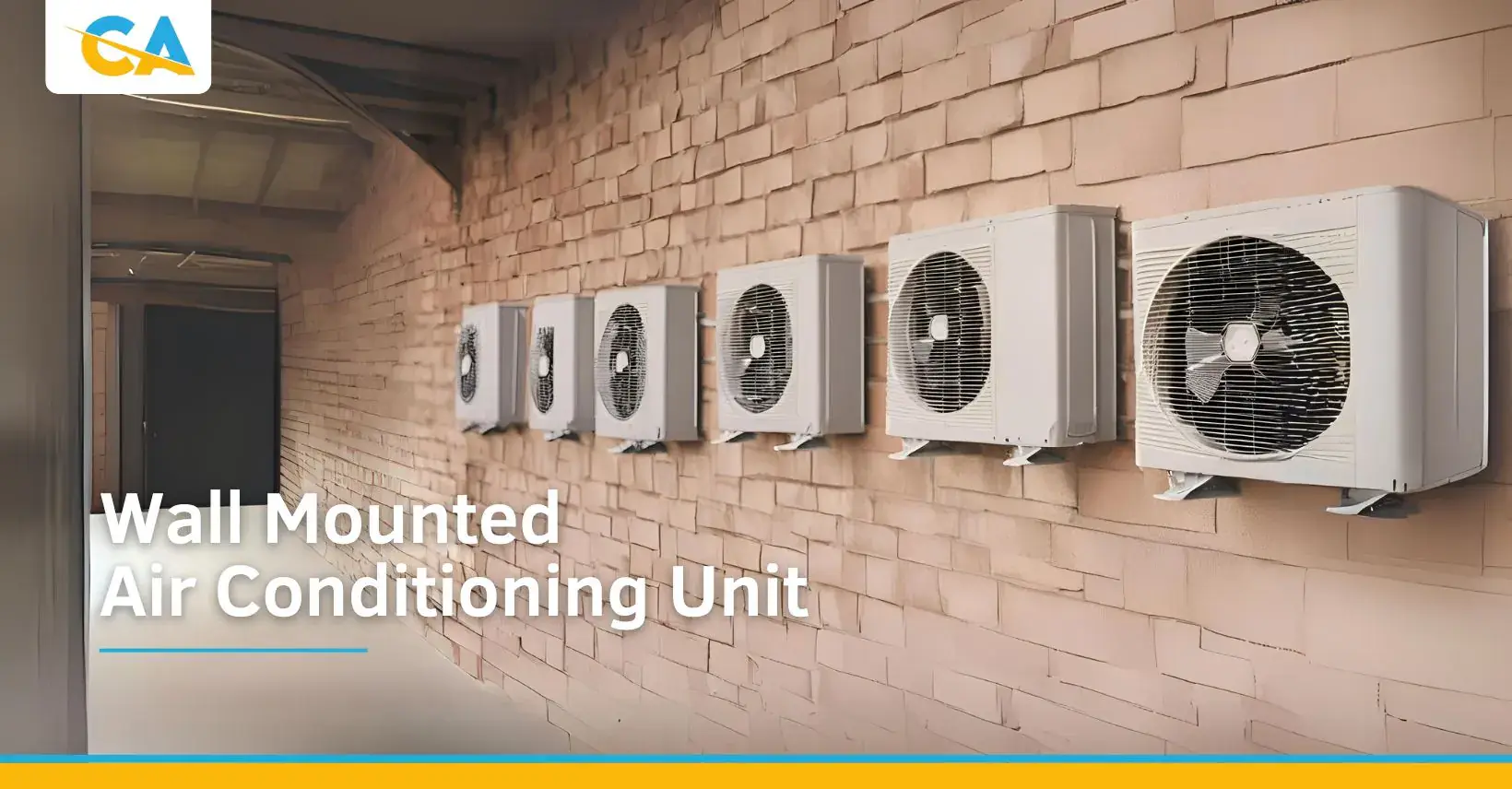
A wall-mounted air conditioning unit is the most common type of air conditioning fitted in UK homes and small business premises. It sits high on the wall, takes up no floor space and can both cool and heat a room from one compact indoor unit.
This guide explains how a wall-mounted unit works, the main system types, how to choose the right model, what affects installation cost and how to keep it running well.
What is a wall-mounted air conditioning unit?
A wall-mounted air conditioning unit is the indoor half of a split system. The slim indoor unit is fixed high on an inside wall and connects through a small hole to an outdoor unit on the ground, a bracket or a flat roof.
Because it needs no ducts or ceiling space, it suits bedrooms, living rooms, flats, shops and small offices. Most UK homes are better suited to wall-mounted units than to ducted systems.
How a wall-mounted air conditioner works
The indoor and outdoor units are joined by insulated copper pipes that carry refrigerant between them. In cooling mode, a fan draws warm room air over the indoor coil. The cold refrigerant inside the coil absorbs heat and moisture from the air, and the cooled air is blown back into the room.
The refrigerant then carries that heat to the outdoor unit, where the compressor and condenser coil release it outside. In heating mode the process runs in reverse, taking heat from the outside air and moving it indoors as an air-to-air heat pump.
Benefits of wall-mounted air conditioning
Because the unit sits above head height, you lose no floor space and furniture and walkways stay clear. The noisy compressor is outside, so the indoor unit is quiet enough for a bedroom, and with no ductwork to fit, most installs need only one small hole through the wall.
Running costs are low too. Most modern units use inverter compressors, which speed up and slow down to match demand instead of switching on and off, so the temperature stays steady and less electricity is used. Remotes, timers, sleep modes and fan speeds come as standard, and many models can also be controlled from a phone app.
Do you need a single split, multi split or ducted system?
The right set-up depends on how many rooms you want to cover.
Single split systems
A single split system pairs one indoor unit with one outdoor unit. It is the simplest and usually the most affordable option for a single room.
Multi split systems
A multi split air conditioning system connects two or more indoor units to a single outdoor unit. Each room has its own controls, and it suits buildings with space for only one outdoor unit.
Ducted systems
Ducted systems hide the indoor unit in a ceiling void and send air through ducts to each room. They look discreet but need ceiling space and cost more to install. Larger offices may suit ceiling air conditioning units instead.
How to choose the right wall-mounted unit
Size the unit to the room
Capacity is measured in kilowatts (kW) and depends on floor area, ceiling height, windows, which way the room faces and how many people use it. Too small and the unit struggles on hot days. Too big and it switches on and off often, wasting energy. An engineer should work this out during a site survey.
Check the energy rating
Look at the energy label for the SEER and SCOP figures. SEER shows cooling efficiency over a season, and SCOP shows heating efficiency. Higher numbers mean lower running costs.
Compare noise levels
Manufacturers list sound levels in decibels (dB). For bedrooms and quiet offices, compare the figure on the lowest fan speed, as that is the setting the unit will use most at night.
Think about placement and warranty
The indoor unit works best high on a wall, clear of curtains and tall furniture, with a route for the pipes and drain. Also check the warranty terms, as many manufacturers require regular servicing to keep it valid.
Installing a wall-mounted air conditioner and what affects the cost
When our Bolton and Manchester air conditioning engineers fit a wall-mounted unit, the job involves fixing the indoor unit, drilling a hole for the pipes, cable and drain, and mounting the outdoor unit. The engineer then connects and pressure tests the pipework, removes air and moisture, and checks the unit heats and cools correctly.
Under F-Gas rules, any work involving refrigerant must be carried out by a certified engineer. The price of a wall-mounted air conditioning installation depends on:
- the size and model of the unit
- the distance between the indoor and outdoor units
- how easy the outdoor location is to reach, for example a high wall or roof
- wall type, such as solid brick, stone or timber frame
- any electrical work needed
The most accurate figure comes from a site survey rather than a price list.
How to maintain a wall-mounted AC unit
Between services, you can:
- clean the filters every few weeks during heavy use
- keep leaves, plants and rubbish away from the outdoor unit
- watch for warning signs such as water dripping indoors, ice on the pipes, odd smells or new noises
Most problems come from blocked filters or a blocked outdoor unit. If cleaning these does not help, switch the unit off and call an engineer. Low refrigerant means a leak, which only an F-Gas certified engineer can repair.
An annual service covers what you cannot do yourself, such as checking refrigerant pressures and cleaning the coils and drain. Our air conditioning servicing costs £85 plus VAT.
Commercial Air Conditioning is based in Westhoughton, Bolton, with REFCOM registered, F-Gas certified engineers and more than 20 years' experience. We fit wall-mounted units for homes and businesses across the UK. Get in touch to arrange a free site survey and quote.
Frequently asked questions
Can a wall-mounted air conditioner heat a room in winter?
Yes. Most modern split units work as heat pumps, so they can warm a room as well as cool it.
Can I install a wall-mounted air conditioning unit myself?
Not legally, if it involves handling refrigerant. F-Gas rules mean the pipework must be connected and charged by a certified engineer. A poor install can also void the warranty.
How long does it take to fit a wall-mounted unit?
A single split system in an easy-to-reach room is often fitted in one day. Multi split systems or tricky outdoor locations can take longer, and your engineer will confirm timings after the survey.
Do I need planning permission for a wall-mounted air conditioner?
It depends on your home and where the outdoor unit will go, as rules vary between councils. Listed buildings, conservation areas, flats and leasehold properties often have extra restrictions on outdoor units, so check with your local council or landlord before work starts.
Categories: Air Conditioning Guide